

Explore Maryland Before Summer Ends

Explore Maryland Before Summer Ends

Educational Field Trips Every Homeschool Family Should Experience

One of the greatest benefits of homeschooling is the flexibility to learn beyond the kitchen table. Some of the most memorable homeschool days happen outside the home, where museums, gardens, aquariums, and science centers encourage curiosity in ways that books alone cannot.

Discover Hands On Learning

Spend the day exploring the National Aquarium, where children can learn about marine life, ecosystems, and conservation. Visit the Maryland Science Center to experiment with interactive displays that make science exciting for learners of different ages, or enjoy a peaceful afternoon at Brookside Gardens while observing plants, insects, and seasonal blooms.

Rather than rushing through every exhibit, encourage your children to slow down, ask questions, and share what captures their attention. One simple question may become the beginning of a new interest, project, or unit study.

History becomes much more meaningful when children can experience it for themselves. Standing where important events happened helps transform names and dates into real stories.

Walk Through Maryland’s History

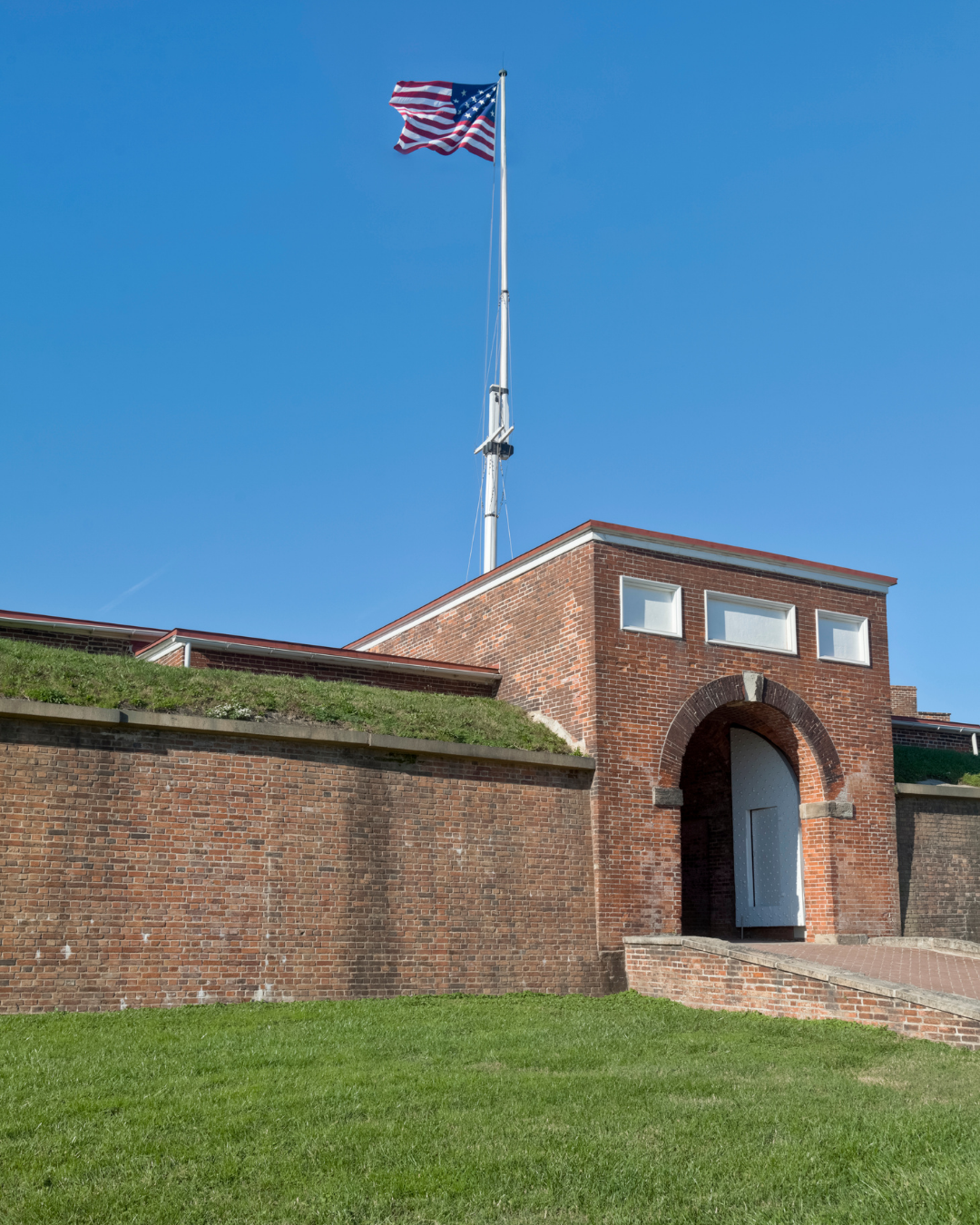
Explore Fort McHenry National Monument, where the events that inspired “The Star Spangled Banner” took place. Walk through the streets of Historic Annapolis, or visit Antietam National Battlefield to gain a deeper understanding of the Civil War and Maryland’s role in American history.

Before your visit, invite your children to research the destination. Afterward, ask them what surprised them, what they learned, and what they would like to explore next. These conversations help children connect what they read with what they experienced firsthand.

Nature provides one of the best classrooms you can find. Every season offers something different to observe, from wildlife and plants to waterfalls, forests, beaches, and changing weather.

Learn Through Nature

Visit Cunningham Falls State Park to explore scenic trails and see Maryland’s tallest cascading waterfall. Spend the day at Assateague Island National Seashore watching the wild horses from a safe distance, or discover another destination through the Maryland State Parks website.

Bring a nature journal, camera, or binoculars and let your children record what they discover. These simple activities can reinforce lessons in science, geography, writing, art, and environmental stewardship while creating meaningful family memories.

Living in Maryland also places families close to some of the nation’s most recognized museums and educational attractions. Washington, DC offers opportunities to explore science, history, nature, government, and the arts, often with free admission.

Explore the Nation’s Capital

Discover dinosaurs, gemstones, and ocean life at the Smithsonian National Museum of Natural History. Learn about aviation and space exploration at the National Air and Space Museum, visit animals from around the world at the Smithsonian’s National Zoo, or explore plants and ecosystems at the United States Botanic Garden.

You do not have to see everything in one visit. Choosing one museum, exhibit, or topic gives children more time to explore without feeling rushed or overwhelmed.

Plan Your Next Adventure

Some of the best homeschool days do not begin with opening a textbook. They begin with opening the car door.

Whether your family is walking through history, discovering marine life, hiking a scenic trail, or exploring a museum, every adventure creates opportunities to ask questions, make memories, and learn together.

The hardest part is often deciding where to go. MACHE’s Free Maryland Field Trip Guide includes ideas for museums, historic sites, farms, parks, aquariums, gardens, and other educational destinations throughout Maryland.

Before summer ends, choose one place your family has never visited and make it your next homeschool adventure. One simple outing could inspire a new interest, strengthen what your children are already learning, and become a memory your family carries into the new school year.

Want More Inspiration?

For more homeschool encouragement, practical resources, upcoming events, and helpful information for every stage of your homeschooling journey, explore the MACHE Blog and MACHE website.

Mangos Make Learning Even Sweeter

Mangos Make Learning Even Sweeter

More Than a Snack: Fun Ways to Learn with Mangos

National Mango Day is the perfect excuse to enjoy one of summer’s sweetest fruits while turning everyday moments into meaningful learning experiences. Whether you’re exploring where mangos grow, trying a new recipe, or discovering the science behind this tropical favorite, a single mango can inspire an afternoon full of curiosity and connection.

Here are a few simple ways to make mangos part of your family’s summer learning.

Discover Where Mangos Grow

Mangos are grown in warm, tropical climates around the world, including countries such as India, Mexico, Brazil, Thailand, and the Philippines. Pull out a world map or globe and locate the places where mangos are grown. Talk about the climates, cultures, and foods that make each region unique using resources like National Geographic Kids: Countries. You can even compare how far a mango travels before it reaches your local grocery store. Learn even more about this popular fruit through the National Mango Board.

Explore the Science of Mangos

What makes a mango sweet? Why does it change color as it ripens? Cut open a mango together and examine its large seed, smell, texture, and color. Discuss how fruits grow, how seeds become trees, and why plants need sunlight, water, and healthy soil.

Older students can also explore the vitamins and nutrients found in mangos by visiting USDA MyPlate: Fruits and discover how fruits help fuel healthy bodies.

Try a Simple Mango Recipe

Learning happens in the kitchen too. Measuring ingredients, following directions, and preparing food together builds valuable life skills while practicing math and reading.

Mango Yogurt Parfaits

Ingredients

  • 2 ripe mangos, diced
  • 2 cups vanilla or plain yogurt
  • 1 cup granola
  • Fresh berries (optional)
  • Honey (optional)

Directions

Layer yogurt, granola, and diced mangos into individual cups. Add berries or a drizzle of honey if desired. Serve immediately and enjoy together.

Taste, Compare, and Learn

Bring home a few different fruits and compare them with a mango. Encourage your children to observe the color, texture, shape, smell, and taste of each one. Ask questions like, Which fruit is the sweetest? Which has the softest texture? Which has the largest seed? Recording observations on a simple chart helps children practice descriptive writing, critical thinking, and comparing and contrasting skills.

Older students can take the activity a step further by surveying family members about their favorite fruit and using the results to create a bar graph or pie chart. They can also calculate percentages or identify the most and least popular choices, adding another layer of math practice. Activities like these help children see how everyday experiences can reinforce classroom concepts in meaningful and memorable ways.

Bring Learning to Life

Turn your mango exploration into a creative project. Younger children can draw or paint a mango, while older students might enjoy writing a short story from the perspective of a mango traveling from a tropical orchard to a grocery store. You could also create a travel brochure or postcard featuring a country where mangos are grown, highlighting its climate, landmarks, traditions, and foods.

These simple projects encourage creativity while reinforcing what children have learned about geography, science, and cultures around the world. They also give children an opportunity to express what they’ve learned in their own unique way, helping ideas stick long after the activity is finished. Best of all, they transform a simple summer fruit into a memorable learning experience the whole family can enjoy.

Keep the Learning Going

If your family enjoys learning through food, continue the adventure with books from your local library. Browse your local Maryland Public Libraries or download the Libby app to borrow ebooks and audiobooks about tropical countries, gardening, healthy eating, or kid-friendly cooking.

A simple piece of fruit can open the door to conversations about science, geography, nutrition, cooking, and creativity. Sometimes the best learning opportunities are the ones already sitting on your kitchen counter.

Want More Inspiration?

For more homeschool encouragement, practical resources, upcoming events, and helpful information for every stage of your homeschooling journey, explore the MACHE Blog and MACHE website.
World Cup Fun Meets Homeschool Learning

World Cup Fun Meets Homeschool Learning

From the Pitch to the Classroom: Turn the World Cup Into a Homeschool Adventure

The cheers, the flags, the dramatic goals, and the excitement of countries from around the world coming together make the World Cup hard to ignore. For homeschool families, the tournament can also become a ready made learning experience that stretches far beyond the soccer field.

The 2026 World Cup is especially unique. It is the first men’s World Cup to feature 48 teams and the first to be hosted across three countries: Canada, Mexico, and the United States. With so many nations, cities, languages, and cultures connected to one event, families have countless ways to turn the excitement into meaningful learning.

Pick a Team and Explore the World

Invite each child to choose one country to follow. Start by locating it on a map, identifying its capital, studying its flag, and learning a few facts about its geography.

Then go a little deeper. What languages are spoken there? What foods are popular? What is the climate like? What landmarks might a visitor see?

Begin with the official list of World Cup teams, then use a kid friendly countries of the world guide to explore beyond the field. Children can create a simple “World Cup Passport” with one page for each country your family studies.

Younger children might color flags or place stickers on a world map. Older students can compare population, government, climate, or major industries between two competing countries.

Let the Scoreboard Teach Math

Soccer naturally creates opportunities for practical math.

Children can track goals, wins, losses, and score differences using the official World Cup fixtures and results. Younger learners can practice addition, subtraction, tally marks, and simple graphs. Older students can calculate averages, percentages, or compare team statistics.

Try creating a family prediction chart before a match. Everyone chooses a predicted winner and final score. Afterward, compare the predictions with the result and calculate who came closest.

For an extra challenge, ask students to design their own tournament bracket and explain the reasoning behind their choices.

Explore the Science Behind the Game

Why does a soccer ball curve through the air? How does the angle of a kick affect direction? What roles do force, friction, motion, and momentum play?

Take the lesson outside and experiment. Kick a ball using different parts of the foot. Try the same kick from different angles. Compare how the ball moves across grass, pavement, or another safe surface.

Older students can explore the physics of a curved soccer ball and connect what they observe to ideas about spin, airflow, force, and motion. Then ask them to make a prediction: what might happen if the ball spins faster or travels at a different speed?

Bring Culture to the Table

Choose a participating country and prepare a simple food or snack inspired by its culture. Listen to music, explore traditional art, or use language learning games to practice a few greetings, numbers, or everyday words.

Families can also compare how different countries experience soccer. Is it called soccer or football? How popular is the sport? Are there famous clubs, traditions, or celebrations connected to the game?

This is a great opportunity to remind children that learning about another culture means looking beyond stereotypes and approaching people with curiosity and respect.

Make the Final Whistle the Beginning

The World Cup may end, but the learning does not have to. A favorite team could inspire a geography study. A surprising statistic could lead to a math project. A powerful kick could spark a science experiment. A flag in the stands could introduce an entirely new culture.

Sometimes the most memorable homeschool lessons begin with something children are already excited to watch.

Want More Inspiration?

For more homeschool encouragement, practical resources, upcoming events, and helpful information for every stage of your homeschooling journey, explore the MACHE Blog and MACHE website.

Why Does Summer Heat Feel So Intense?

Why Does Summer Heat Feel So Intense?

Why Is It So Hot? Turn Summer Heat Into a Homeschool Science Lesson

After a stretch of intense summer heat across our region, your family may be asking the same question many of us are: Why is it so hot?

While extreme heat calls for caution, it can also spark meaningful questions about weather, humidity, sunlight, and the world around us. From comparing temperatures to observing how different surfaces absorb heat, summer weather can become a timely homeschool science lesson — without requiring a complicated curriculum or expensive supplies.

Why Does It Feel Hotter Than the Temperature?

Have you ever checked the forecast and noticed two different numbers: the actual temperature and the “feels like” temperature?

That difference often involves the heat index, which combines air temperature and relative humidity to estimate how hot conditions feel to the human body. When humidity is high, sweat may not evaporate as efficiently, making it harder for the body to cool itself.

Try this with older students: check the temperature, humidity, and heat index at the same time each day for one week. Record the numbers and compare them. When was the biggest difference between the actual temperature and the heat index?

Younger children can simply draw a sun, cloud, or thermometer beside each day’s weather observation.

Which Surface Gets the Hottest?

Here is a simple experiment that can turn your yard, porch, or neighborhood into a mini science lab.

Choose several outdoor surfaces, such as:

  • grass
  • soil
  • concrete
  • pavement
  • a shaded area

Using an outdoor or infrared thermometer, measure each surface at roughly the same time. Ask children to predict which one will be hottest before collecting the data.

Why might pavement feel much hotter than grass? This can lead into a discussion about the urban heat island effect, where developed areas may become warmer than nearby places with more vegetation and natural surfaces.

For safety, keep the experiment brief, avoid the hottest part of the day, and have an adult handle any surfaces or equipment that may be hot.

Follow the Shade

Another easy activity requires nothing more than chalk and a sunny spot.

Choose a stationary object outside — perhaps a mailbox post, basketball hoop, or patio chair. Mark the end of its shadow with chalk in the morning, around midday, and later in the afternoon.

What changes?

Children can measure the shadow each time and talk about how Earth’s rotation changes the apparent position of the sun throughout the day. Older students can graph their measurements or explore why shadows are shorter at certain times.

Make a Family Heat Tracker

Create a simple chart and track the weather for five to seven days. Record:

  • daily high temperature
  • humidity
  • heat index
  • cloud cover
  • sunrise or sunset time

Use a local forecast or explore the National Weather Service HeatRisk tool together. At the end of the week, ask children what patterns they notice.

Did cloudy days feel different? Was the hottest day also the most humid? Did the forecast match what your family observed?

Learn From the Weather — Safely

Summer heat can open the door to lessons in meteorology, chemistry, Earth science, math, and even geography. But the most important lesson is knowing when it is safer to observe from indoors.

On dangerously hot days, move experiments inside, keep outdoor activities short, drink plenty of water, and follow local weather alerts.

The next time your child asks, “Why is it so hot?” do not stop at “because it’s summer.” Grab a notebook, check the forecast, make a prediction, and see where the question leads.

Want More Inspiration?

For more homeschool encouragement, practical resources, upcoming events, and helpful information for every stage of your homeschooling journey, explore the MACHE Blog and MACHE website.

America Turning 250

America Turning 250

America 250: Exploring 250 Years of American History Through Homeschooling

In 2026, America will celebrate a major milestone: 250 years since the signing of the Declaration of Independence. Known as “America 250,” this historic anniversary gives families across the country an opportunity to reflect on the people, events, ideals, and sacrifices that shaped the United States into the nation it is today.

For homeschool families, America 250 is more than a national celebration — it is a chance to bring history to life in meaningful and memorable ways.

One of the greatest benefits of homeschooling is the ability to explore history beyond textbooks. America’s 250th anniversary creates the perfect opportunity to dive deeper into the founding of our nation, the values that influenced its beginnings, and the many stories that have unfolded over the last two and a half centuries. From studying the Declaration of Independence and the Constitution to learning about inventors, leaders, reformers, pioneers, and everyday citizens, families can approach American history with curiosity, creativity, and thoughtful discussion.

America 250 also encourages families to think critically about the nation’s journey. History includes moments of courage, innovation, faith, perseverance, and unity, but it also includes challenges, hardships, and lessons that continue to shape our country today. Homeschooling allows parents to guide these conversations in age-appropriate ways while helping students understand the importance of civic responsibility, freedom, and community.

There are countless ways homeschool families can participate in America 250 celebrations. Families may choose to visit historical sites, museums, monuments, and battlefields; create timelines or patriotic art projects; read biographies of influential Americans; host themed co-op activities; or even plan state studies that highlight each state’s role in American history. Students can write essays, perform speeches, recreate historical events, or interview veterans and community leaders to gain personal perspectives on the American experience.

At MACHE, we believe this anniversary is a unique opportunity to inspire a love of learning while strengthening family connections through shared educational experiences. As homeschoolers, we have the flexibility to turn this once-in-a-generation celebration into something engaging, interactive, and deeply impactful for our children.

To help families make the most of America 250, we are excited to offer our America 250 eBook! This resource is designed to support homeschool parents with educational ideas, activities, discussion prompts, and inspiration to help students explore the history and heritage of the United States in fun and meaningful ways. Whether you are teaching elementary students, middle schoolers, or high school teens, the eBook can serve as a helpful guide as you celebrate this historic milestone together.

As our nation prepares to commemorate 250 years of American history, homeschool families have an incredible opportunity to not only study the past but also encourage the next generation to think about the future. America 250 reminds us that history is not just something we read about — it is a story we are still helping to write every day.

Click Here to Sign Up and Get your Free Download

Enjoyed this article?

For more insightful homeschool related articles, visit our MACHE blog.

Back to “Home” School Webinar

Back to “Home” School Webinar

Our Back to “Home” School Webinar Community

The price of liberty is eternal vigilance.

We are grateful for the wonderful turnout at our recent Back to “Home” School Webinar. It was an evening filled with encouragement, practical guidance, and renewed purpose for families as they step into a fresh homeschool season.

Thank You to Our Guest Speakers

We extend a heartfelt thank-you to our incredible presenters, each bringing valuable insight to support Maryland homeschool families:

Israel Wayne
Shared faith-filled encouragement and practical reminders about the strength of the family’s role in education.

Will Estrada, Esq.
Provided clarity and confidence around homeschool freedom and the legal protections families rely on.

Dr. Amy Moore
Offered brain-based, research-supported strategies to help parents understand how children learn best.

LaNissir James
Brought relatable encouragement, reminding parents that homeschooling is a meaningful journey they don’t walk alone.

Their combined wisdom made this webinar a powerful resource for both new and experienced homeschoolers.

We Appreciated Your Presence

To every family who joined us—thank you. Your engagement and questions created a sense of connection that reflects the heart of the homeschool community in Maryland.

At MACHE, we believe that parents are fully equipped to guide their children’s education. Events like this remind us that, together, we can support and strengthen one another along the way.

“Homeschooling is not a journey we walk alone—it is a community built on purpose, courage, and connection.”

Watch the Replay

If you missed the live session or would like to revisit the discussion, the full webinar playback is now available. We invite you to watch, be encouraged, and continue your homeschool year with confidence.

Will you join us?